Embroidery shop software
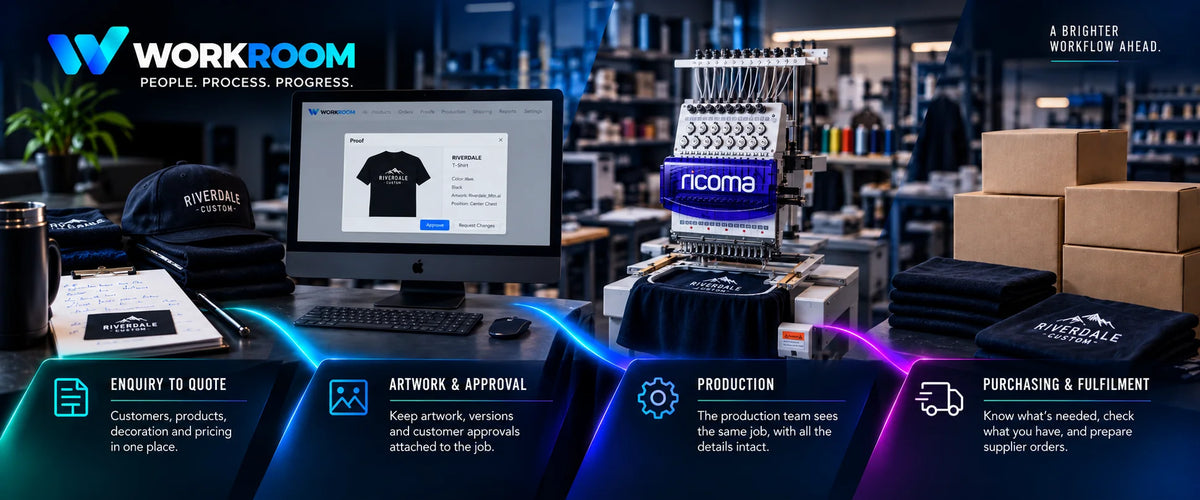
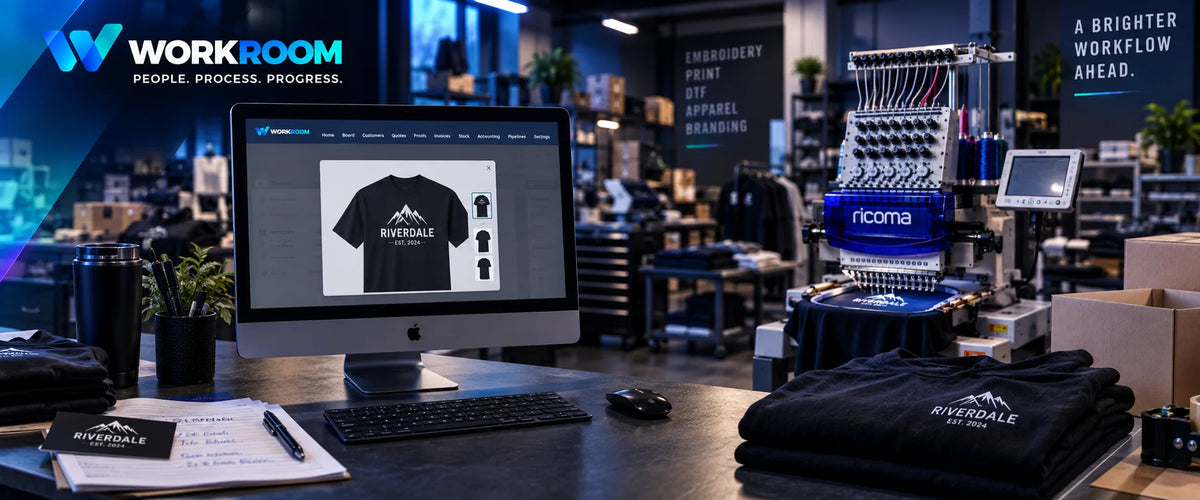
WorkRoom is embroidery shop software built inside a working embroidery shop. It holds the design, the digitised file, the approved thread colours and the machine queue on one job record, so the reorder eight months later stitches out exactly like the first run.
Where embroidery jobs come apart
Embroidery is detail work, and the detail is exactly what leaks between the front counter and the machine.
- The quote. Stitch count guessed from a similar logo, cap setup charged the same as a flat, the digitising fee forgotten until the invoice from the digitiser arrives.
- The digitiser. Artwork emailed out, the DST comes back three days later, gets saved to somebody's desktop. The cost never lands on the job.
- The thread. "Club red" is a memory. Two cones short is discovered at the machine, not at the quote.
- The reorder. Forty more polos, same as last time. Which version of the file? Which colourway? Somebody goes hunting through email.
Generic job software does not know any of this exists. WorkRoom was built by embroiderers, so it does.
What WorkRoom holds on an embroidery job
A design library per customer. Every logo has its digitised file, its approved colourway, its thread codes and its placement, held against the customer rather than in an inbox. Stitch count sits on the design so pricing and run time come from the file, not from memory.
Quoting from the catalogue. Pick the garment from your supplier catalogue, add the decoration, and your markup rules and quantity breaks apply themselves. Setup types are priced as what they are: a cap is not a flat, and 3D puff is not either. The margin is visible before the quote leaves sales.
Digitising as part of the workflow. Send the artwork to your preferred digitiser from inside the job. When the file comes back it is attached to the design it belongs to, with its cost on the job. See StockRoom.
Thread Match and Threadcards. Drop in a design and match its colours against your own thread library, whichever brand you run. Swap to what is actually in stock or pick a different shade. The result is a structured Threadcard: the colour spec the operator works from, not a PNG with a guess written on it.
Thread stock by cone. Thread, backing and garments across locations, with the shortage flagged on the job before it is scheduled rather than after the machine stops.
A production board the floor can read. Jobs queued by machine and department, with the approved artwork, the Threadcard and the placement already attached. No rekeying and no printed sheet that went out of date on Tuesday.
Approvals that count. The customer signs off a specific artwork version and colourway, and that approval travels with the job to the machine.
Reorders that remember. Open last year's job and it already knows the file, the colourway and the thread decision, and it can tell you what you are short before you promise a date.
One embroidery job, start to finish
A rugby club rings about 120 training tops. The enquiry becomes a job the moment you take the details. The garment comes from the catalogue, the crest is priced from its stitch count with left chest and back as two placements, and the quote goes out with the margin already checked. The club picks a colourway, signs off the crest, and the approval attaches to that version. The Threadcard flags that one red is two cones short, so it is added to the supplier cart before the job hits the board. The 6-head runs it the week of the 21st with everything attached. In April the club rings for forty more, and the job already knows what red it was.
Built for New Zealand and Australian embroiderers
Priced in New Zealand dollars, GST included in the thinking, with the supplier catalogues NZ and Australian shops actually buy from. WorkRoom is not an accounting package, a design tool or a digitising suite; it is the operating layer between taking the work and finishing it, and it hands clean data to the systems that do those other jobs. Read how the workflow fits together or see the pricing.
Questions embroiderers ask
Does WorkRoom price by stitch count?
Decoration pricing carries quantity breaks and setup charges that you define, and the stitch count lives on the design so it can drive both the price and the run time. You set the bands to match how your shop already quotes.
Do I need Wilcom or another digitising package?
No. WorkRoom does not digitise. It manages the file, the digitiser handoff, the thread decision and the production record around whatever digitising you already use.
Can one order carry embroidery and something else?
Yes. An embroidered polo, a DTF tee and a printed sign can belong to the same order for the same customer, each tracked through its own queue with one dispatch and one invoice.
What does it cost?
WorkRoom starts at NZ$249 a month with three full users included. StockRoom, which holds Thread Match and Threadcards, is an add-on. The first twenty shops join as Founding Partners with StockRoom included for a year.
Book a workflow review and bring one of your messiest embroidery jobs. We would rather show you WorkRoom on a job that went wrong than on a tidy demo.
Further reading for embroiderers
- The colour spec that makes every reorder match
- The reorder call: turning "same as last time" into a four-minute sale
- The handover checklist: six things that travel from sales to the floor
More in the Guides.